
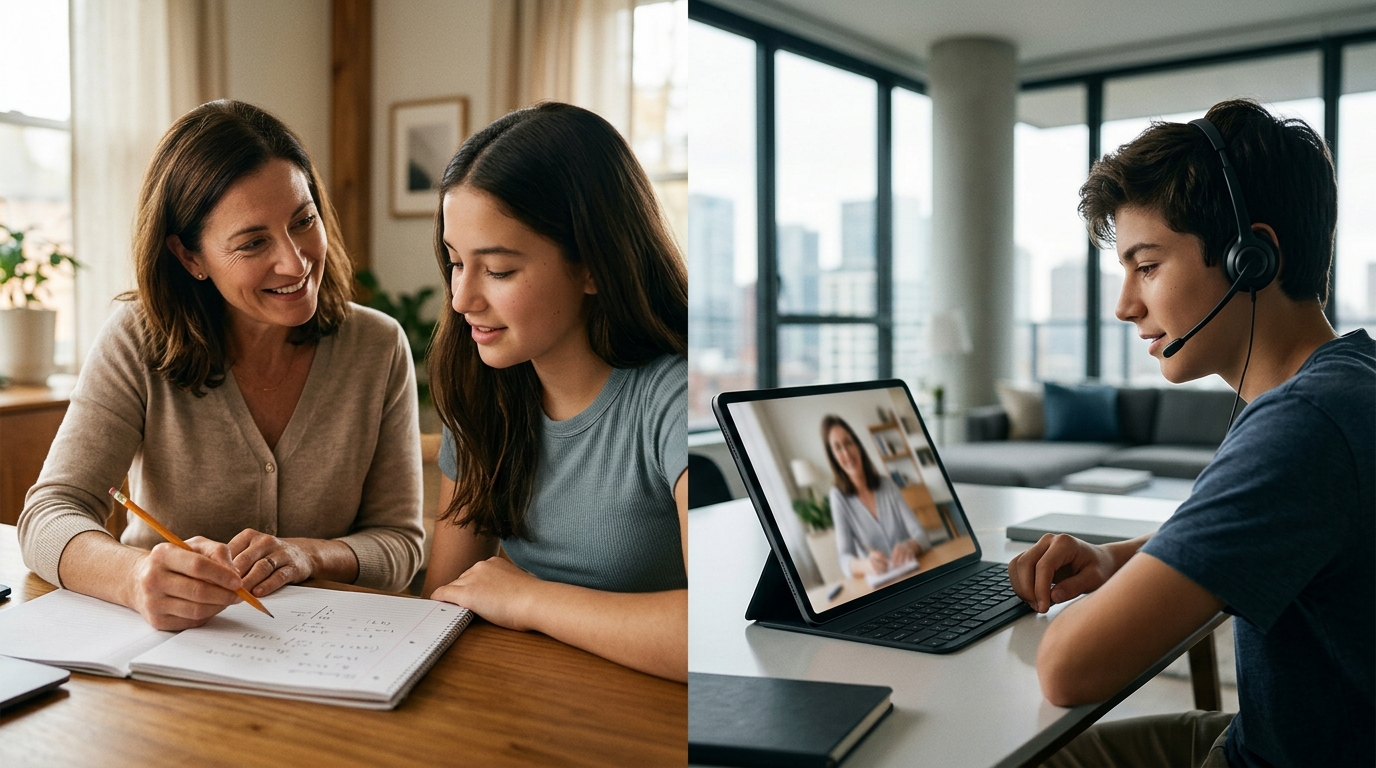
For decades, the traditional image of tutoring involved a quiet room, a physical whiteboard, and a tutor sitting shoulder-to-shoulder with a student. However, the educational landscape has shifted dramatically. Recent data indicates that over 70% of private tutoring sessions now occur in digital environments, a significant jump from pre-2020 figures. This shift raises a critical question for parents and students: can online math tutoring be as effective as in-person sessions? The answer is not a simple yes or no, but rather a nuanced exploration of how technology, pedagogy, and student needs intersect to determine success. (Home)
Understanding the Core Differences
Before diving into effectiveness, it is vital to define the operational mechanics of each approach. Online tutoring is a digital learning service delivered via video conferencing platforms, often utilizing shared digital whiteboards and screen-sharing capabilities. In-person tutoring is a face-to-face educational service where the tutor and student share the same physical space, allowing for immediate tactile interaction with physical manipulatives and paper-based work.
The primary distinction lies in the medium of instruction. Online sessions rely heavily on digital literacy and self-regulation, while in-person sessions leverage non-verbal cues and physical presence. According to a 2023 report by the National Tutoring Association, student engagement levels are comparable when the tutor actively adapts to the chosen medium, suggesting that the platform itself is less important than the pedagogical approach.
The Advantages of Online Tutoring
Online tutoring has gained immense popularity due to its flexibility and accessibility. For families in the Akron, Ohio area, and beyond, the ability to connect with a master teacher without the constraints of travel time is a significant benefit. The efficiency of digital tools allows for real-time annotation, which can be saved and reviewed later, providing a persistent record of the lesson.
Accessibility and Convenience
One of the most compelling arguments for online tutoring is the removal of geographical barriers. Students no longer need to commute to a tutor's home or office. This is particularly beneficial for students with busy schedules or those who experience anxiety about traveling to a new environment. A study published in the Journal of Educational Psychology found that reduced commute times correlated with higher attendance rates and lower dropout rates in tutoring programs.
Interactive Digital Tools
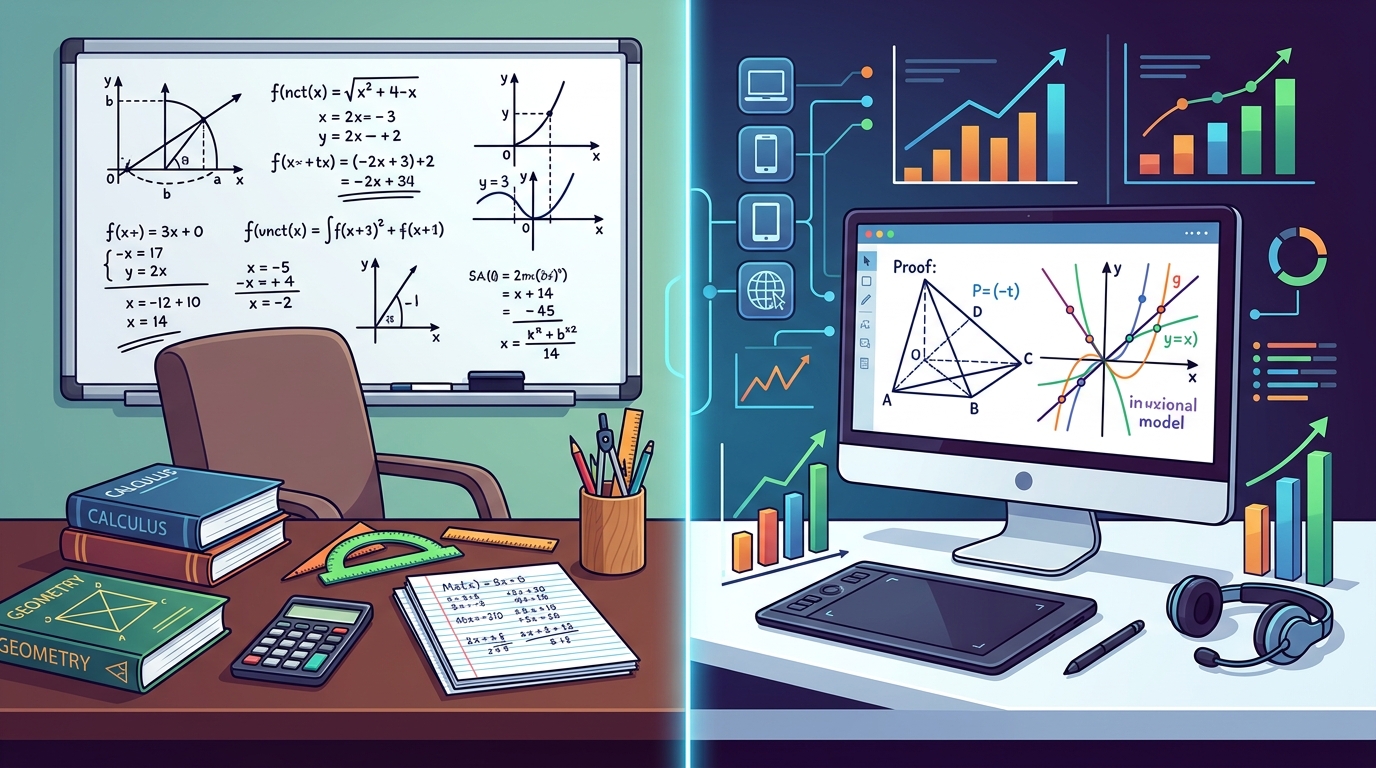
Modern online tutoring platforms offer features that physical whiteboards cannot match. Screen sharing allows tutors to instantly pull up dynamic graphs, interactive geometry software, or video explanations. These visual aids can make abstract concepts, such as calculus or algebra, more tangible. Furthermore, the ability to record sessions (with permission) allows students to revisit complex explanations, reinforcing learning outside of the scheduled hour.
The Advantages of In-Person Tutoring
Despite the rise of digital learning, in-person tutoring retains distinct advantages, particularly for younger students or those who struggle with focus. The physical presence of a tutor can provide a level of accountability and emotional support that is difficult to replicate virtually.
Non-Verbal Communication
In-person sessions allow tutors to read subtle body language cues. A tutor can see if a student is confused by their facial expression or frustrated by their posture, allowing for immediate intervention. This direct observation is crucial for building rapport and trust, which are foundational to effective learning. Research from the University of Chicago suggests that face-to-face interaction significantly enhances emotional connection and student motivation.
Tactile Learning
For certain subjects, particularly in early mathematics, physical manipulatives are essential. Students benefit from handling blocks, geometric shapes, or counting objects. This tactile engagement helps solidify abstract concepts. While digital manipulatives exist, the sensory experience of physical objects remains a powerful tool for cognitive development in young learners.
Effectiveness by Subject Area
The effectiveness of online versus in-person tutoring often depends on the specific subject matter and the student's grade level. Below is a comparative overview of how each modality performs across different educational stages.
| Subject Area | Online Effectiveness | In-Person Effectiveness | Key Consideration |
|---|---|---|---|
| Early Elementary Math | Moderate | High | Requires physical manipulatives and strong parental support online. |
| Algebra & Geometry | High | High | Digital whiteboards excel at showing step-by-step problem solving. |
| Calculus & Advanced Math | High | High | Focus is on logic and procedure, which translates well to digital formats. |
| Test Preparation (SAT/ACT) | High | Moderate | Online allows for immediate access to digital practice tests. |
As noted by educational researchers, the complexity of the subject matter often dictates the best medium. For advanced topics, the clarity of digital annotation often outweighs the benefits of physical presence. However, for foundational concepts, the tactile and emotional support of in-person interaction remains superior.
Choosing the Right Modality
Selecting the right tutoring format requires an honest assessment of the student's learning style, needs, and environment. There is no one-size-fits-all solution. The goal is to find a match that maximizes engagement and minimizes barriers to learning.
Assessing Student Needs
Consider the student's attention span and technological comfort. Older students who are digitally native often thrive in online environments. Younger students or those with special needs may benefit more from the structured, hands-on approach of in-person sessions. Additionally, consider the student's current math anxiety levels. For some, the comfort of their own home reduces anxiety, while for others, the formal setting of a tutor's office provides necessary structure.
The Role of the Tutor
The most critical factor in effectiveness is the tutor's ability to adapt. A skilled tutor, such as Michael J. Murphy, who has over 35 years of classroom experience, knows how to pivot between modalities to meet the student where they are. The credo of effective tutoring is that every student is capable of learning mathematics, regardless of the medium. This belief drives the tutor to find creative solutions, whether online or in-person, to ensure true understanding comes from mathematical thinking, not just completing procedures.
Key Takeaways
- Effectiveness is Comparable: Research shows that online and in-person tutoring can yield similar results when the tutor is skilled and the student is engaged.
- Flexibility Wins: Online tutoring offers superior convenience, eliminating commute times and allowing for more flexible scheduling.
- Tactile Learning Matters: In-person tutoring is often better for early elementary students who benefit from physical manipulatives.
- Digital Tools Enhance Learning: Online platforms provide unique advantages like recorded sessions and dynamic visual aids for complex topics.
- Student Needs Dictate Choice: The best modality depends on the student's age, learning style, and specific math challenges.
- Tutor Adaptability is Key: A master teacher can effectively deliver content in both formats, focusing on meaningful problem solving.
- First Consultation is Free: Many tutors offer free initial consultations to determine the best fit for the student.
Frequently Asked Questions
Is online math tutoring as effective as in-person?
Yes, online math tutoring can be just as effective as in-person sessions, particularly for middle school, high school, and college-level mathematics. The key is active engagement and the use of interactive digital tools. Studies indicate that when students are motivated and the tutor is skilled, the medium matters less than the pedagogical approach.
What age group benefits most from in-person tutoring?
Younger students, typically in elementary school, often benefit most from in-person tutoring. They require more tactile learning aids and may struggle with the self-regulation needed for online sessions. However, this varies by individual child, and some young learners adapt well to digital formats with parental support.
How do I know if my child is ready for online tutoring?
Readiness for online tutoring depends on your child's ability to focus on a screen and manage their own learning environment. If your child can sit for 30-45 minutes and engage with digital tools, they are likely ready. A free consultation can help assess this readiness.
Can online tutoring help with math anxiety?
For many students, online tutoring can reduce math anxiety by providing a comfortable, low-pressure environment. However, for others, the lack of face-to-face connection may increase anxiety. It is important to trial both options to see which reduces stress for your child.
What technology is required for online tutoring?
Students need a reliable internet connection, a device with a camera and microphone (such as a laptop or tablet), and a digital whiteboard application. Most tutoring platforms provide simple, user-friendly tools that require no technical expertise.
How does online tutoring handle homework help?
Online tutors can review homework in real-time by having the student hold their work up to the camera or by sharing digital documents. This allows for immediate feedback and correction, just as in an in-person session.
Is sliding scale pricing available for online sessions?
Yes, many private tutors offer sliding scale pricing based on need and commitment. This makes high-quality math education more accessible to families who might otherwise find private tutoring cost-prohibitive.
Schedule Your Consultation
Whether you choose online or in-person tutoring, the goal is to transform math anxiety into confidence. Michael J. Murphy, M.A., offers private math tutoring with a master teacher who has over 35 years of classroom experience. His approach focuses on turning "I hate math" into "I can do this!" by fostering true understanding through mathematical thinking.
Don't wait to address your child's math challenges. Contact Got Math Tutoring today to schedule your free first consultation. Let's find out if we are a good fit and start the journey toward mathematical success. Visit My Resume to learn more about the qualifications and experience behind the instruction.