
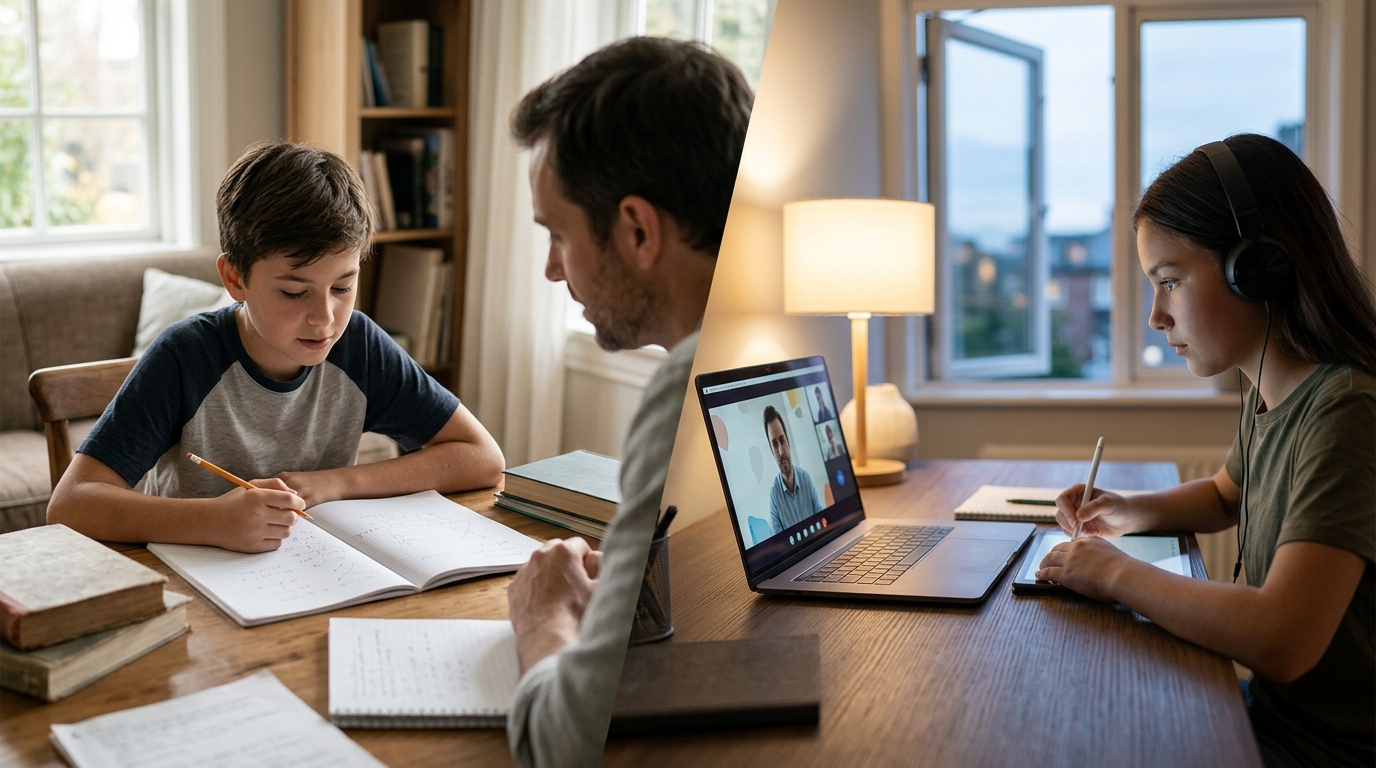
Parents and students often face a critical decision when seeking academic support: should they invest in traditional face-to-face sessions or embrace the flexibility of digital learning? Recent educational data indicates that the effectiveness of tutoring depends less on the medium and more on the pedagogical approach and student engagement. According to a 2023 report by the National Center for Education Statistics, personalized tutoring interventions significantly boost student achievement regardless of the delivery format, provided the instruction is tailored to individual learning gaps. This article examines the nuances of both models to help you make an informed choice for your academic journey. (Home)
Core Pedagogical Approach
The foundation of effective math tutoring lies in the teacher's ability to diagnose misconceptions and rebuild understanding from the ground up. Mathematical thinking is the process of analyzing problems logically rather than memorizing procedures. Whether online or in-person, the goal is to shift students from a fixed mindset to a growth mindset. This shift is crucial because it teaches students that ability is not static but develops through effort and practice.
In-person tutoring offers immediate physical presence, allowing tutors to read body language and adjust pacing in real-time. However, online tutoring has evolved to match this intimacy through high-definition video and interactive digital whiteboards. The key is not the location but the consistency of the feedback loop. When a student struggles with a concept, the tutor must identify the root cause, whether that is a calculation error or a fundamental misunderstanding of the theory.
For students who believe they "will never get math," the environment plays a significant role. Some students feel more comfortable asking questions in a familiar home setting, while others thrive in the focused atmosphere of a dedicated tutoring space. The effectiveness of the session is determined by the student's willingness to engage with challenging material.
Flexibility and Access
One of the most significant advantages of online tutoring is the removal of geographical barriers. Students in rural areas or those with busy schedules can access top-tier instruction without the commute. This accessibility is particularly valuable for specialized subjects like calculus or advanced algebra, where local expertise might be limited.
According to data from the U.S. Bureau of Labor Statistics, the demand for flexible work and learning arrangements has grown steadily since 2020, reflecting a broader societal shift toward remote solutions. For families in the Akron, Ohio area, this means that high-quality tutoring is available without the need for extensive travel time.
Online sessions also offer greater scheduling flexibility. Sessions can often be booked with shorter notice, allowing for last-minute test preparation or homework help. This agility is crucial for students who need immediate support before a major exam or project deadline. The ability to record sessions for later review is another unique benefit of the digital format, allowing students to revisit complex explanations at their own pace.
Technology and Tools
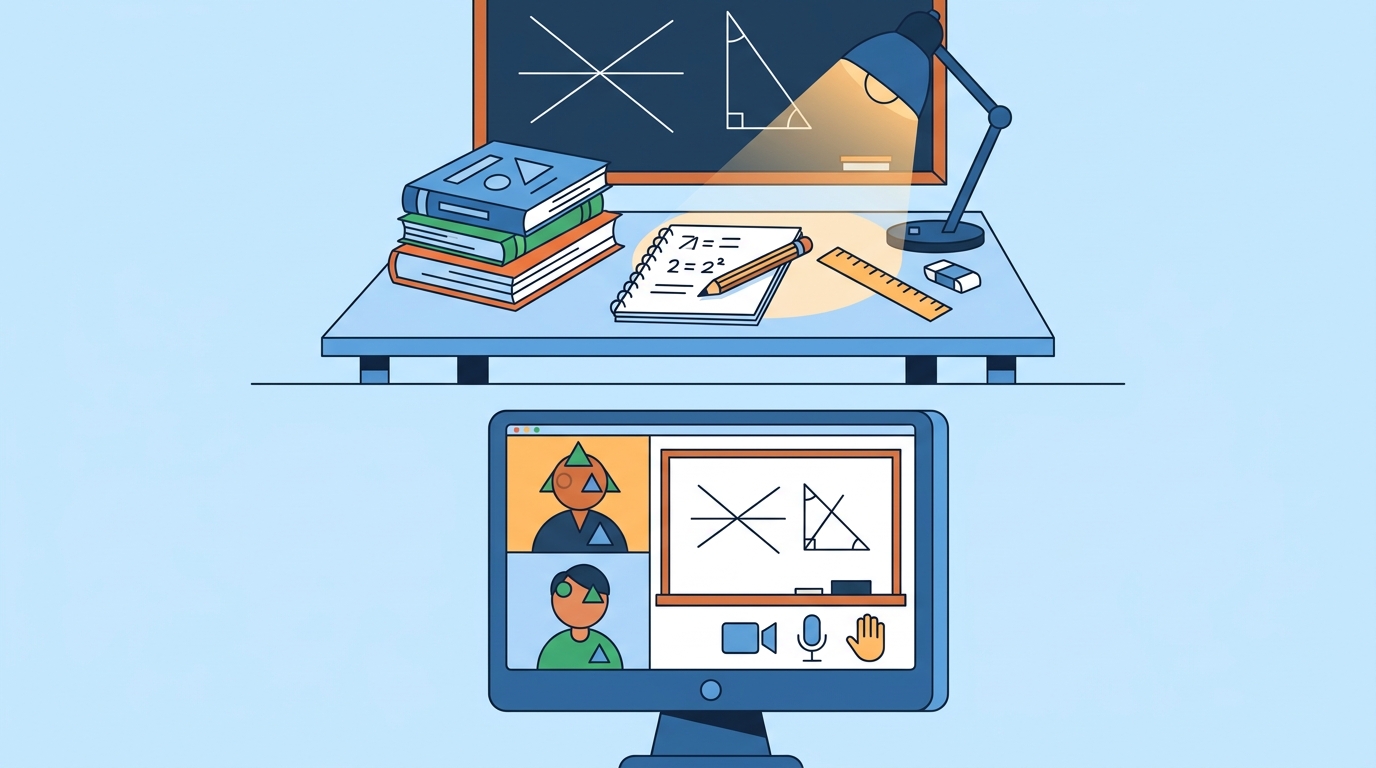
Modern online tutoring platforms leverage technology to enhance the learning experience. Digital whiteboards allow tutors and students to write, draw, and manipulate equations together in real-time. This collaborative space mimics the traditional blackboard experience but adds the power of undo, copy, and paste functions.
Metacognition is the ability to think about your own thinking process. Online tools can help students develop this skill by allowing them to track their errors and identify patterns in their mistakes. For example, a tutor can use screen sharing to highlight a specific step in a problem where the student consistently goes wrong, making the abstract concept of "attention to detail" concrete and visible.
While in-person tutoring relies on physical manipulatives like blocks or geometric shapes, online tutors use virtual manipulatives that are equally effective. These digital tools can be animated to show dynamic changes, helping students visualize abstract concepts like functions or geometric transformations. The integration of technology in online tutoring is not just a substitute for paper and pencil but an enhancement of the instructional toolkit.
Student Engagement and Anxiety
Math anxiety is a real obstacle for many students. It can manifest as avoidance, panic, or a complete shutdown of cognitive function during math tasks. The effectiveness of tutoring in alleviating this anxiety depends on the relationship between the tutor and the student.
Some students find that the reduced social pressure of online sessions helps them open up more. Without the fear of being watched by peers, they are more willing to make mistakes and ask "stupid" questions. This safe environment is essential for learning, as making mistakes is not only acceptable but essential for brain growth. The idea that "neurons that fire together wire together" explains how new neural pathways are formed when students struggle productively and learn from errors.
Conversely, some students require the physical presence of a mentor to stay focused. For these students, the distractions of home can be detrimental. In-person tutoring provides a dedicated space free from digital distractions, helping students concentrate fully on the material at hand. The choice between online and in-person should be based on the individual student's learning style and environmental needs.
Cost and Logistics
When comparing online and in-person tutoring, cost is a significant factor. In-person tutoring often includes a premium for the tutor's travel time and the use of physical resources. Online tutoring can be more cost-effective because it eliminates travel costs and allows tutors to serve a broader client base.
However, the value of tutoring is not just in the hourly rate but in the outcomes. A tutor who can effectively communicate complex concepts and build student confidence is invaluable. For students serious about applying themselves, the investment in tutoring yields long-term benefits in academic performance and self-esteem.
Many tutors offer sliding scale rates based on need and commitment. This approach ensures that high-quality education is accessible to a wider range of families. It is important to discuss financial options openly with the tutor to find a arrangement that works for both parties.
Comparison Summary
| Feature | Online Tutoring | In-Person Tutoring |
|---|---|---|
| Flexibility | High (Remote access) | Medium (Location dependent) |
| Engagement | Varies by student | High (Physical presence) |
| Tools | Digital whiteboards, screen share | Physical manipulatives, paper |
| Cost | Often more affordable | May include travel premium |
| Focus | Requires self-discipline | Dedicated environment |
Key Takeaways
- Effectiveness depends on pedagogical approach, not just the delivery method.
- Online tutoring offers superior flexibility and access to specialized tutors.
- In-person tutoring provides a distraction-free environment for some students.
- Digital tools can enhance learning through real-time collaboration and visualization.
- Math anxiety can be mitigated through a supportive and safe learning environment.
- Sliding scale rates may be available to accommodate different financial needs.
- Both formats can lead to significant academic improvement with the right tutor.
Frequently Asked Questions
Is online math tutoring as effective as in-person?
Yes, research suggests that online tutoring can be equally effective if the tutor uses interactive tools and maintains strong engagement. The key is the quality of instruction and the student's willingness to participate.
What technology do I need for online tutoring?
You need a stable internet connection, a computer or tablet with a camera and microphone, and a digital whiteboard application. Most tutors provide the software platform for the sessions.
How do I know if my child is ready for online tutoring?
If your child can focus on a screen for 45-60 minutes and has a quiet space to work, they are likely ready. Some students thrive online, while others prefer the structure of in-person sessions.
Can online tutoring help with math anxiety?
Yes, many students find the online environment less intimidating, allowing them to ask questions without fear of judgment. This can help build confidence over time.
What is the cost of online tutoring?
Rates vary by tutor and subject. Some tutors offer sliding scale rates based on need and commitment. It is best to contact the tutor directly for specific pricing information.
How do I track my child's progress?
Regular communication with the tutor is essential. Many tutors provide progress reports and can share recorded sessions for review. Tracking errors and patterns is also a key part of the process.
Get Started Today
Whether you choose online or in-person tutoring, the most important step is taking action. If you are in the Akron, Ohio area, or prefer the convenience of remote learning, I invite you to schedule a free consultation. Let's discuss your specific needs and determine the best path forward for your academic success. Visit the Contact Page to get in touch. You can also learn more about the teaching philosophy and experience to see if we are a good fit.