
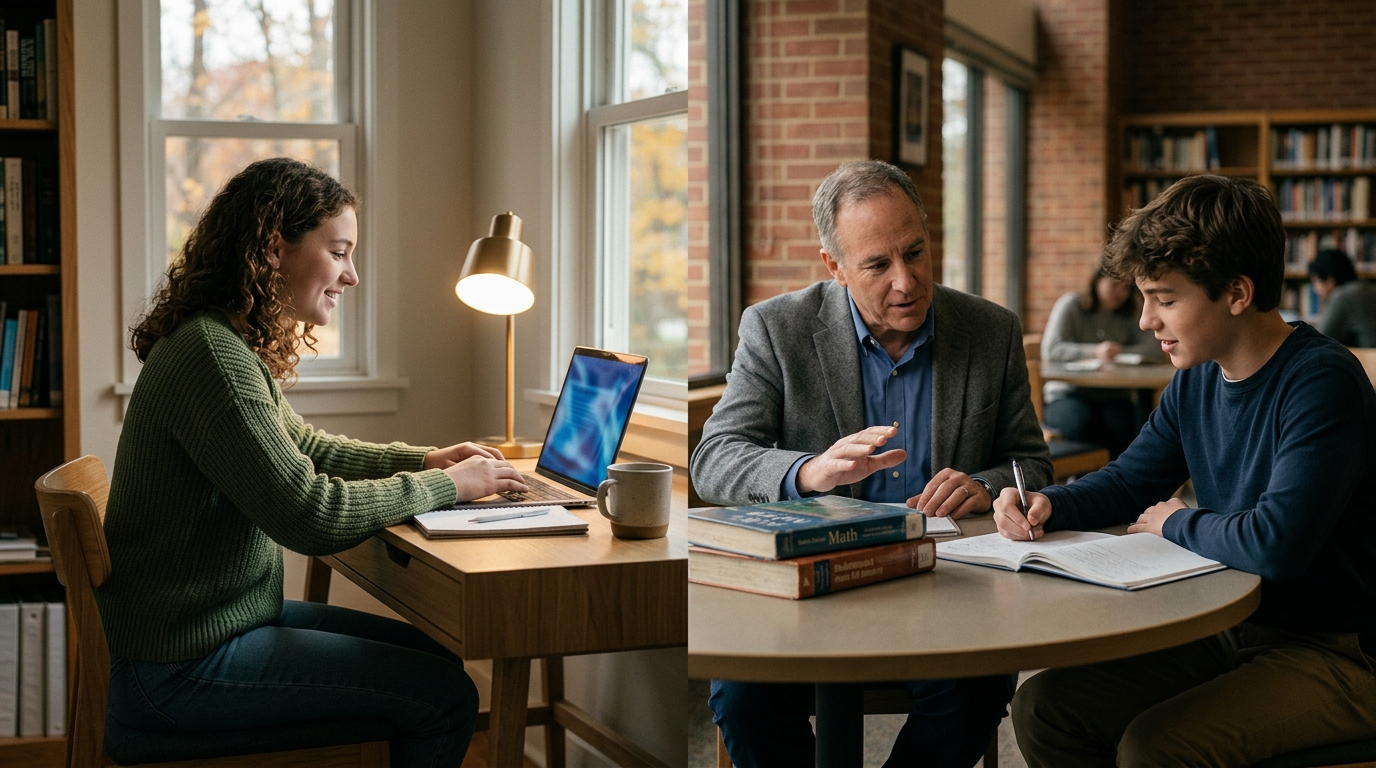
Math anxiety affects a significant portion of students, with studies indicating that approximately 120 million adults in the United States experience math anxiety, which can severely hinder academic performance and career prospects in STEM fields. The debate over whether digital instruction or traditional face-to-face interaction yields better results is no longer just about convenience. It is about pedagogical efficacy, cognitive load management, and the specific learning styles of the student. For families in the Akron, Ohio area and beyond, understanding these nuances is critical to selecting the right educational support.
The Pedagogical Foundation of Math Mastery
Before comparing delivery methods, we must define what makes math tutoring effective. Mathematical thinking is the ability to analyze problems logically and construct solutions, rather than merely memorizing procedures. This distinction is vital because many students struggle not with the math itself, but with the anxiety associated with it.
Effective tutoring requires a master teacher who can identify these blocks. Michael J. Murphy, M.A., brings over 35 years of classroom experience to this challenge. His approach is built on the belief that every student is capable of learning mathematics. This foundational philosophy applies equally to both digital and physical classrooms. The medium changes, but the goal remains the same: turning "I hate math" into "I can do this!"
Research from the American Psychological Association suggests that reducing math anxiety is a prerequisite for cognitive engagement. Whether online or in-person, the tutor must create a safe environment where mistakes are viewed as learning opportunities. This psychological safety is the first metric of effectiveness.
The Unmatched Value of In-Person Sessions
In-person tutoring offers a tactile and immediate feedback loop that is difficult to replicate digitally. For students who struggle with focus or require physical manipulation of objects to understand abstract concepts, the physical presence of a tutor is invaluable.
Non-Verbal Cues and Immediate Correction
In a physical setting, a tutor can observe subtle signs of confusion, such as furrowed brows or hesitant posture, and adjust their explanation in real-time. This level of non-verbal communication is crucial for building trust. Michael Murphy, often referred to by former students and parents as "The Math Whisperer," utilizes this direct connection to change mindsets. He does not just improve skills; he alters the student's self-perception regarding their intellectual capabilities.
Deep Focus and Reduced Distractions
Home environments can be rife with distractions. A dedicated in-person session, whether at a library, a quiet cafe, or a structured learning center, minimizes these interruptions. For students who lack self-regulation skills, the physical act of sitting down with a tutor creates a ritual of focus. This is particularly important for younger students or those with attention deficits.
According to data from the National Council of Teachers of Mathematics, personalized instruction is the most significant predictor of math success. In-person tutoring allows for hyper-personalized pacing that adapts instantly to the student's cognitive state.
The Strategic Advantages of Online Tutoring
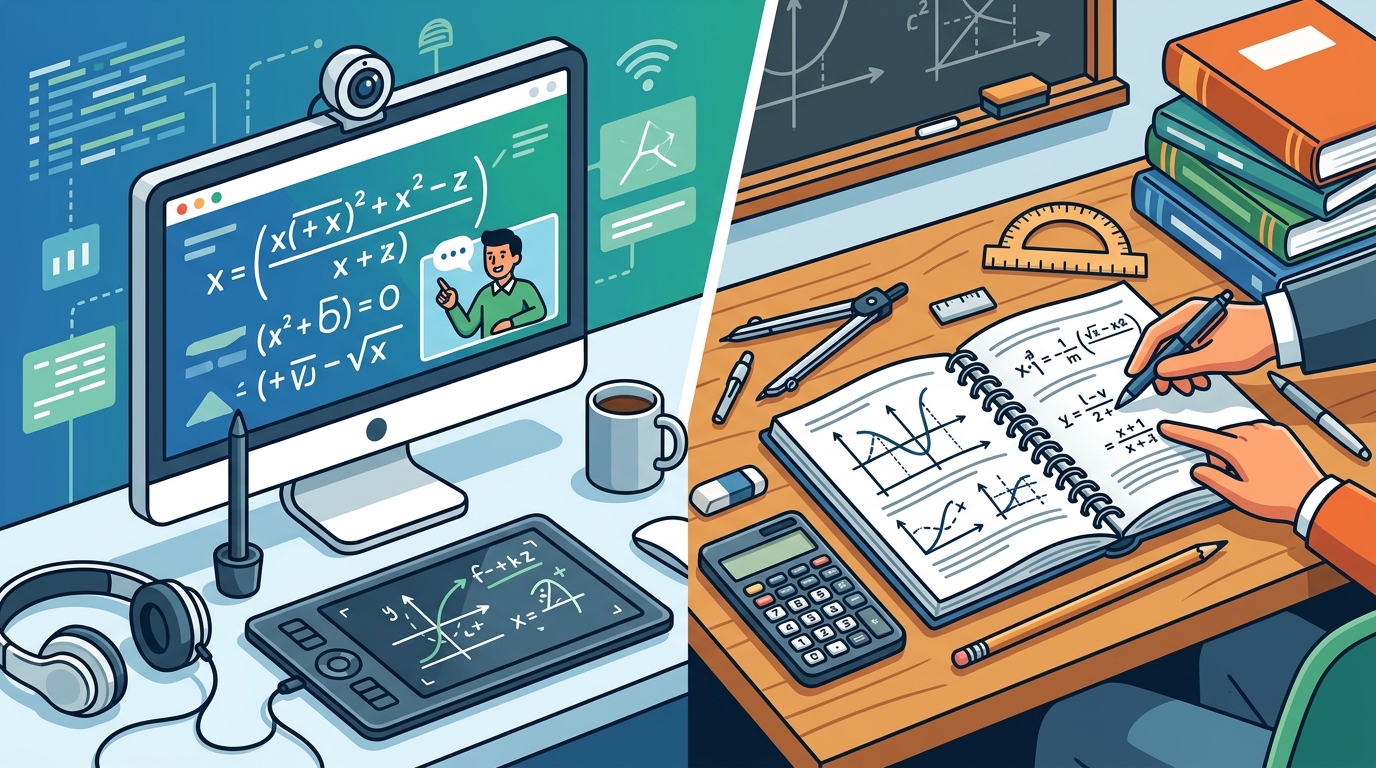
Online tutoring has evolved far beyond simple video calls. Modern digital platforms offer interactive whiteboards, screen sharing, and real-time annotation tools that can actually enhance the learning experience for certain types of learners.
Accessibility and Geographic Reach
One of the most significant benefits of online tutoring is accessibility. Students in rural areas or those with transportation challenges can access top-tier instruction without the commute. While Michael Murphy primarily serves the Akron, Ohio area in person, online sessions expand this reach, allowing for greater flexibility in scheduling.
Digital Literacy and Tool Integration
Online sessions naturally integrate digital tools that are increasingly relevant in higher education and the workforce. Students learn to navigate digital interfaces, use graphing software, and manage their own digital workspace. These are transferable skills that complement mathematical learning. A study by the U.S. Department of Education found that blended learning approaches, which combine online and face-to-face instruction, often yield better outcomes than purely traditional methods.
Recorded Progress and Review
Online sessions can be recorded (with permission) for review. This allows students to revisit complex explanations at their own pace. It also enables parents to observe the tutoring process, fostering a collaborative approach to education. This transparency is a key component of the service offered by Got Math Tutoring.
When to Choose Which Format
The choice between online and in-person tutoring should be based on the student's specific needs, learning style, and current academic challenges. There is no one-size-fits-all answer.
| Factor | In-Person Tutoring | Online Tutoring |
|---|---|---|
| Best For | Students needing high structure, tactile learning, or those with severe math anxiety. | Students needing flexibility, digital tool integration, or those comfortable with self-directed learning. |
| Focus Level | High. Minimized distractions through physical presence. | Moderate. Requires student discipline to avoid home distractions. |
| Cost | $100/hour. Sliding scale available based on need. | $100/hour. Sliding scale available based on need. |
| Convenience | Requires travel time and scheduling around physical availability. | High. Can be conducted from any location with internet access. |
| Feedback Style | Immediate, non-verbal, and tactile. | Visual, digital annotation, and screen-shared. |
For many students, a hybrid approach is ideal. Starting with in-person sessions to build confidence and trust, then transitioning to online for advanced topics or exam prep, can be a powerful strategy. The first consultation is free, allowing us to assess which format is best for your child.
Key Takeaways
- Experience Matters: Michael J. Murphy has over 35 years of classroom experience, ensuring that tutoring is grounded in proven pedagogical methods.
- Proven Results: Former students have gone on to become engineers, teachers, and Ivy League graduates, demonstrating the long-term impact of effective math tutoring.
- Flexible Pricing: The rate is $100/hour, with a sliding scale available based on financial need and commitment level.
- Math Anxiety is Real: Addressing the emotional component of math is as important as teaching the content. Michael is known for changing mindsets, not just scores.
- Both Formats Work: Both online and in-person sessions are effective, depending on the student's learning style and need for structure.
- Free Consultation: A free first consultation is offered to determine the best fit for the student's specific needs.
- Local Expertise: Services are available in the Akron, Ohio area, providing a trusted local resource for families.
Frequently Asked Questions
Is online math tutoring as effective as in-person?
Yes, online math tutoring can be just as effective as in-person sessions. The key factors are the quality of the tutor and the student's engagement. Online sessions offer unique benefits like digital tool integration and flexibility, while in-person sessions provide tactile feedback and reduced distractions. The effectiveness depends on the individual student's learning style.
What subjects do you cover?
Got Math Tutoring covers a wide range of mathematical subjects, from foundational arithmetic to advanced calculus. The specific curriculum is tailored to the student's current level and goals. You can view more details about the subject areas on the Got Math Tutoring homepage.
How much does tutoring cost?
The standard rate is $100 per hour. However, a sliding scale is available based on financial need and the level of commitment. This ensures that quality education is accessible to serious students regardless of their financial situation.
Do you offer a free consultation?
Yes, the first consultation is completely free. This session allows us to discuss your child's needs, assess their current level, and determine if we are a good fit. You can contact me directly to schedule this initial meeting.
What is your teaching philosophy?
The core philosophy is that every student is capable of learning mathematics. True understanding comes from mathematical thinking, not just completing procedures. Students learn best through meaningful problem solving, and developing critical thinking skills is essential for success in life.
Can I switch between online and in-person sessions?
Absolutely. Flexibility is a key component of the service. Depending on scheduling, travel, or specific learning needs, sessions can be conducted either in person in the Akron, Ohio area or online.
What qualifications does the tutor have?
Michael J. Murphy holds a Master's degree (M.A.) and has over 35 years of classroom experience. His background includes working with students who have gone on to achieve success in engineering, teaching, and Ivy League institutions. You can view his full professional resume for more details.
Schedule Your Free Consultation
Whether you choose online or in-person tutoring, the goal is the same: to build confidence, improve skills, and foster a love for learning. Michael Murphy is dedicated to meeting students where they are on their path of learning. Do not let math anxiety hold your child back.
Take the first step today. Contact Got Math Tutoring to schedule your free consultation and discover how we can help your student succeed.