
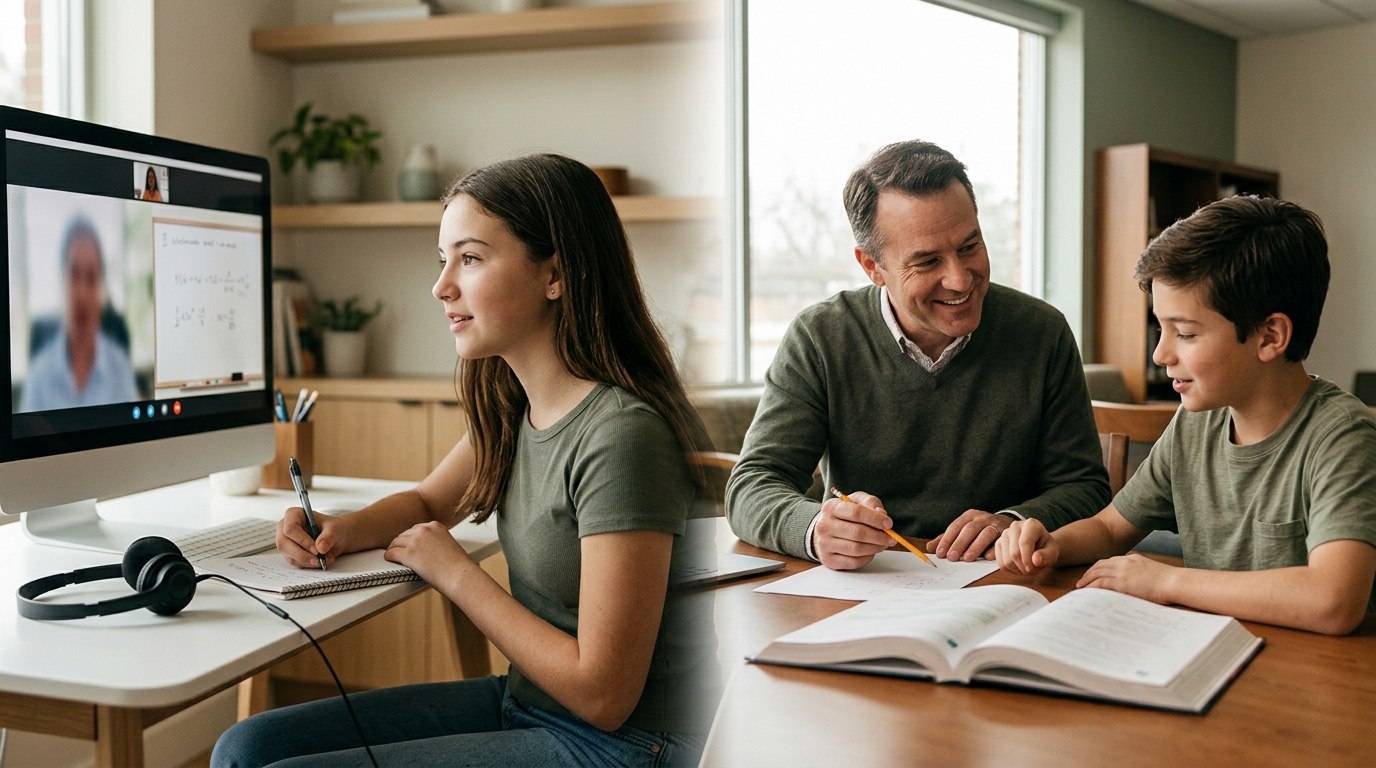
Math anxiety affects a significant portion of students, often stemming from a fear of failure or a lack of foundational confidence. According to recent educational psychology studies, approximately 60 to 90 percent of students report experiencing some form of math anxiety, which can severely impede their academic performance. This statistic highlights the critical need for effective tutoring interventions that address not just the mathematical content, but also the psychological barriers to learning. Whether delivered through a digital screen or a physical classroom, the goal remains the same: to transform confusion into clarity and fear into competence. (Home)
Understanding the Impact of Math Anxiety
Math anxiety is not merely a dislike of numbers. It is a genuine psychological response that triggers stress and tension when faced with mathematical tasks. This anxiety can manifest in various ways, from avoiding math-related subjects to experiencing physical symptoms like a racing heart during exams. The root cause often lies in past negative experiences, such as public embarrassment or a lack of support during critical learning periods.
Addressing this anxiety requires a tutor who is not only knowledgeable in mathematics but also skilled in building trust and confidence. The effectiveness of tutoring, regardless of the format, depends heavily on the tutor's ability to create a safe, non-judgmental environment. This is where the philosophy of Mathematical Thinking becomes crucial. It is the practice of focusing on the underlying concepts and reasoning processes rather than just memorizing procedures. By shifting the focus to understanding, tutors can help students develop a growth mindset, which is essential for long-term success.
The Online Advantage: Flexibility and Accessibility
Online math tutoring has gained immense popularity due to its convenience and accessibility. For families in the Akron, Ohio area, or those living in remote locations, digital tutoring removes geographical barriers. Students can receive high-quality instruction from the comfort of their homes, eliminating the stress and time commitment associated with commuting.
One of the primary benefits of online tutoring is the use of digital whiteboards and interactive tools. These tools allow tutors to visualize complex problems in real-time, making abstract concepts more concrete. For example, a tutor can dynamically manipulate geometric shapes or graph functions to show how changes in variables affect the outcome. This visual representation can be particularly helpful for students who are visual learners.
Additionally, online sessions can be recorded (with permission), allowing students to review the material later. This feature is invaluable for reinforcing learning and preparing for exams. The flexibility of scheduling is another significant advantage. Students can often book sessions that fit around their extracurricular activities and school schedules, reducing the likelihood of missed lessons.
The In-Person Benefit: Tangible Interaction
In-person tutoring offers a unique set of benefits that some students and parents prefer. The physical presence of a tutor allows for immediate, nuanced feedback on body language and facial expressions. This non-verbal communication can provide valuable insights into a student's level of understanding and engagement. For instance, a tutor might notice a student's furrowed brow or hesitant posture, prompting them to adjust their explanation or offer additional support.
Furthermore, in-person sessions can facilitate a more hands-on learning experience. Students can work directly on paper with a tutor observing their process, which can help identify specific errors in reasoning or calculation. This tactile interaction can be particularly beneficial for younger students or those who struggle with digital interfaces.
However, in-person tutoring requires a commitment to travel and scheduling. For busy families, the logistics of getting to and from tutoring sessions can be a significant hurdle. This is where the balance between convenience and interaction becomes a key decision factor for parents.
Pedagogical Equivalence: Does the Medium Matter?
Research in educational technology suggests that the medium of instruction is less important than the quality of the interaction. A study published in the Journal of Educational Psychology found that there is no significant difference in learning outcomes between online and in-person tutoring when the instructional methods are equivalent. The key factor is the tutor's ability to adapt their teaching style to the student's needs.
Effective tutoring, whether online or in-person, relies on several core principles:
- Diagnostic Assessment: Identifying the student's current level of understanding and specific areas of difficulty.
- Personalized Instruction: Tailoring lessons to the student's learning style and pace.
- Feedback and Correction: Providing immediate, constructive feedback to correct misconceptions.
- Encouragement and Support: Building confidence and fostering a positive attitude towards math.
When these principles are applied consistently, the format of the tutoring becomes secondary. A skilled tutor can create an engaging and effective learning environment in any setting. The focus should be on the tutor's expertise and their ability to connect with the student, rather than the platform used for delivery.
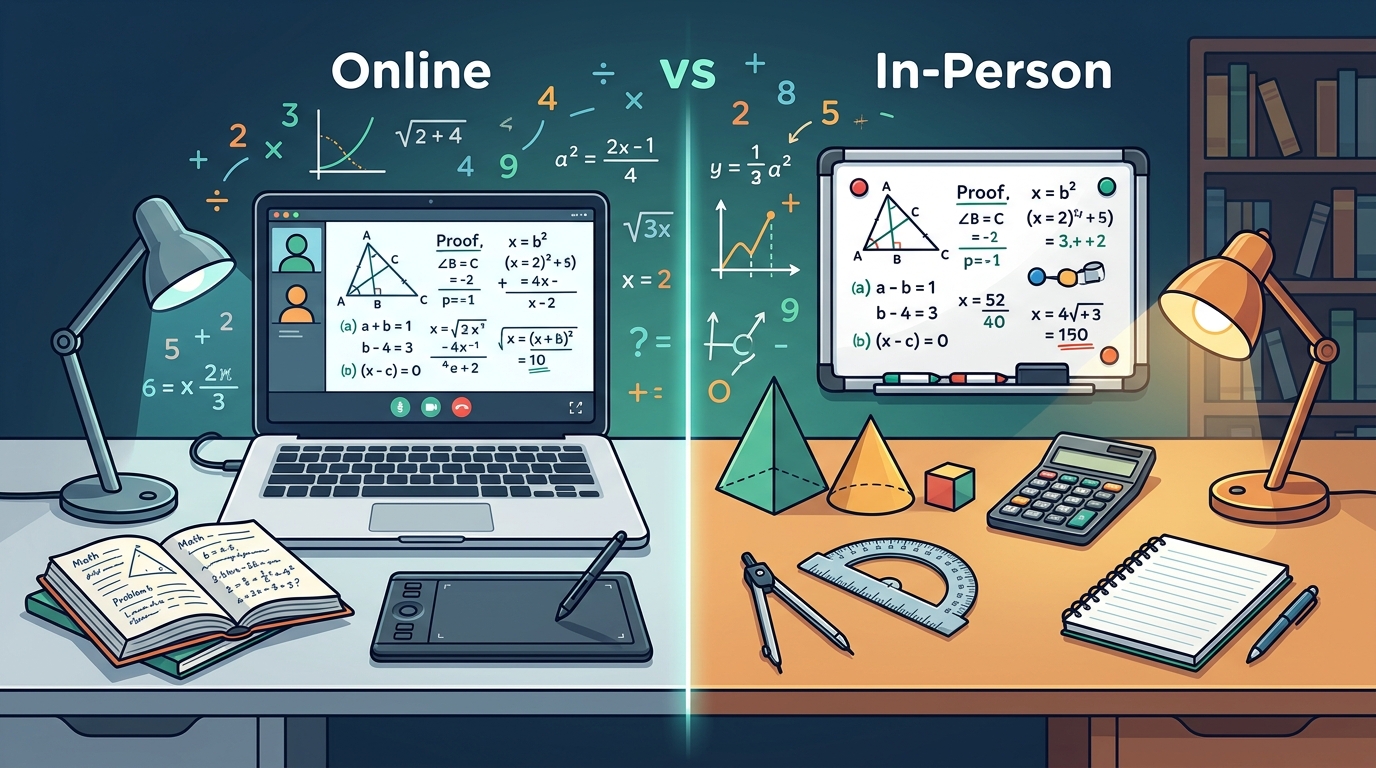
Choosing the Right Fit for Your Student
Selecting between online and in-person tutoring depends on several factors, including the student's learning style, personal preferences, and logistical constraints. Here is a comparison to help guide your decision:
| Factor | Online Tutoring | In-Person Tutoring |
|---|---|---|
| Convenience | High. No travel required. | Low. Requires commuting. |
| Interaction | Digital and visual. | Physical and tactile. |
| Flexibility | High. Easier to reschedule. | Moderate. Fixed location. |
| Distractions | Home environment. | Controlled environment. |
| Cost | Often more affordable. | May include travel fees. |
For students who are self-motivated and comfortable with technology, online tutoring can be highly effective. For those who need more structure and hands-on guidance, in-person sessions might be preferable. It is also worth noting that some students may benefit from a hybrid approach, combining both formats to maximize their learning potential.
Key Takeaways
- Math anxiety is a widespread issue affecting up to 90 percent of students, making effective tutoring crucial.
- Online tutoring offers significant advantages in flexibility, accessibility, and the use of interactive digital tools.
- In-person tutoring provides tangible interaction and immediate non-verbal feedback, which can be beneficial for some learners.
- Research indicates that pedagogical quality is more important than the delivery medium for learning outcomes.
- Michael J. Murphy, M.A., brings over 35 years of classroom experience to both online and in-person tutoring.
- The rate for private tutoring is $100 per hour, with a sliding scale available based on need and commitment.
- A free first consultation is offered to determine the best fit for each student's unique needs.
Frequently Asked Questions
Is online math tutoring as effective as in-person tutoring?
Yes, research suggests that online tutoring can be just as effective as in-person tutoring when the instructional methods are high-quality and interactive. The key is the tutor's ability to engage the student and adapt to their learning style.
What subjects do you cover?
I cover a wide range of mathematical subjects, from foundational arithmetic to advanced calculus. The specific subjects covered depend on the student's grade level and curriculum.
How do I schedule a session?
You can schedule a session by contacting me through the contact form on the website. I will get back to you within a few hours to discuss availability.
Do you offer a sliding scale for tutoring?
Yes, I offer a sliding scale based on need and commitment. This ensures that quality tutoring is accessible to students who are serious about applying themselves.
What is your teaching philosophy?
My philosophy is that every student is capable of learning mathematics. I focus on mathematical thinking and meaningful problem solving to help students develop a deep understanding of the subject.
Can I record our online sessions?
Recording sessions can be a helpful tool for review. Please discuss this with me during our initial consultation to ensure it aligns with our teaching goals.
How long does it take to see improvement?
The timeline for improvement varies depending on the student's starting point and consistency. However, many students report increased confidence and better grades within the first few weeks of regular sessions.
Start Your Journey Today
Whether you choose online or in-person tutoring, the most important step is taking the first one. Don't let math anxiety hold your student back from their full potential. With over 35 years of experience, Michael J. Murphy, M.A., is dedicated to helping students achieve their goals. Contact me today to schedule your free first consultation and discover how we can work together to build confidence and competence in mathematics.