

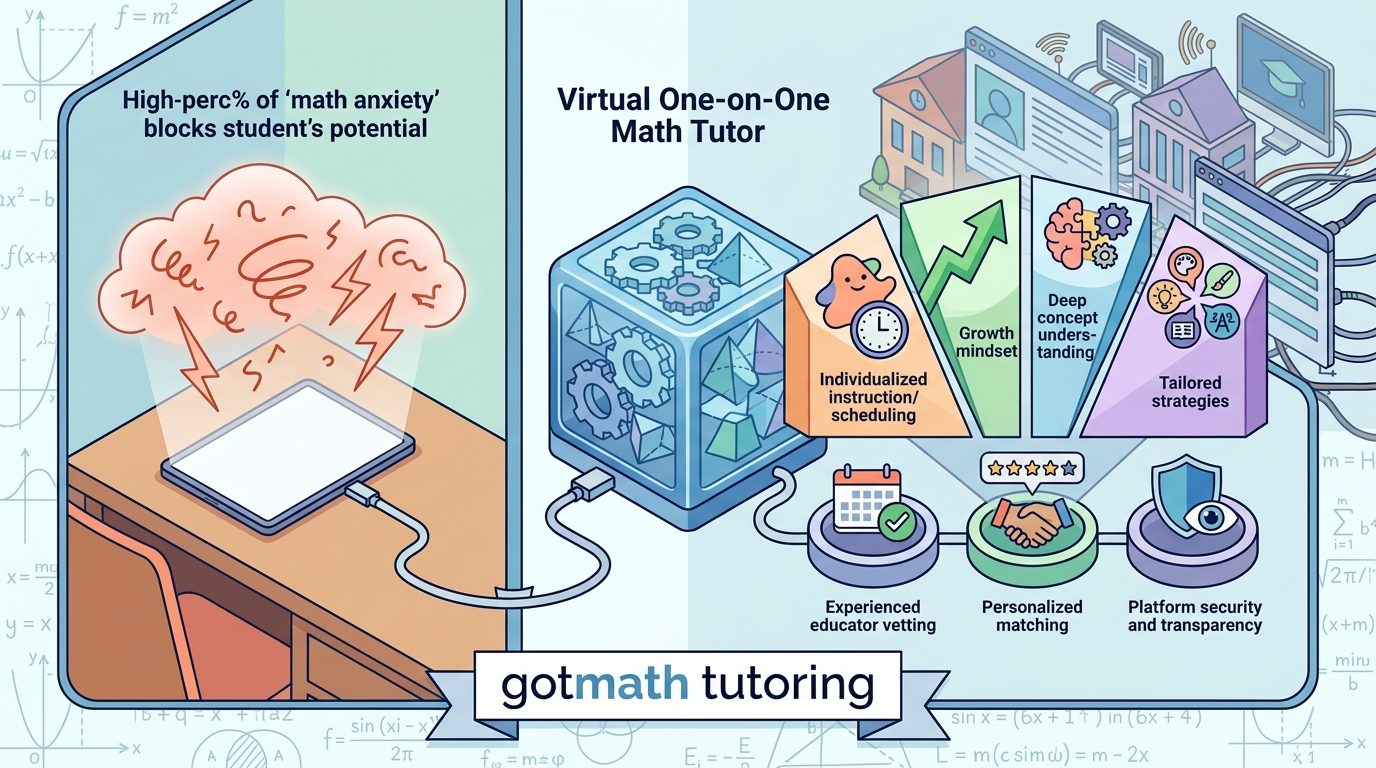
Math anxiety affects a significant portion of students, with data showing that approximately 60 to 90 percent of individuals experience some level of math-related stress. This psychological barrier often prevents learners from reaching their full potential, regardless of their innate intelligence. The rise of remote education has made virtual tutoring a viable and often superior alternative to traditional in-person sessions. However, the digital landscape is saturated with providers, making the selection process complex. Choosing the right tutor requires evaluating pedagogical philosophy, technical infrastructure, and proven track records. This guide outlines the critical criteria for identifying a high-impact virtual math educator. (Home)
Understanding Pedagogical Philosophy
The most critical factor in selecting a tutor is their underlying teaching philosophy. Mathematics is not merely a collection of procedures to be memorized. It is a discipline built on logical reasoning and problem-solving. A tutor who focuses solely on procedural fluency may help a student pass a test, but they will not build lasting mathematical competence.
Mathematical thinking is the process of analyzing problems through logical structures rather than rote memorization. Effective virtual tutors prioritize conceptual understanding. They help students connect new ideas to prior knowledge. This approach is essential for long-term retention. Students who understand the "why" behind a formula are better equipped to apply it in novel contexts.
Look for tutors who emphasize mathematical habits of mind. These are cognitive strategies that allow students to approach unfamiliar problems with confidence. A strong tutor will teach students how to ask good questions. They will encourage productive struggle. This method helps students develop resilience. It transforms math anxiety into curiosity. The goal is to move students from a fixed mindset to a growth mindset. This shift is vital for academic success in higher education and beyond.
Evaluating Technical Infrastructure
Virtual tutoring relies heavily on the quality of the digital environment. A lagging video connection or a confusing interface can disrupt the flow of instruction. Therefore, the technical setup is a non-negotiable criterion for selection.
High-quality virtual tutoring requires a platform that supports real-time collaboration. This includes digital whiteboards, screen sharing, and annotation tools. The tutor must be able to visualize the student's thought process. This allows for immediate correction and guidance. The technology should facilitate, not hinder, the learning experience.
Metacognition is the awareness and understanding of one's own thought processes. In a virtual setting, tutors use technology to help students monitor their own attention. They teach students to track their errors and identify patterns. This self-monitoring skill is powerful. It benefits students far beyond mathematics. It applies to all areas of study and professional life. Ensure your chosen tutor uses tools that promote this level of engagement.
Credentials and Classroom Experience
While online credentials are important, practical classroom experience is often more indicative of tutoring success. A tutor who has spent years in a traditional classroom understands the common pitfalls students face. They know how to explain complex concepts in multiple ways.
When reviewing tutor profiles, look for extensive teaching history. A tutor with 35 or more years of experience has likely encountered every type of learning obstacle. They have worked with students who love math and those who dread it. This breadth of experience allows them to adapt quickly to individual needs. They can identify whether a struggle is due to a gap in knowledge or a lack of confidence.
Mathematical learning is both cumulative and cyclical. It builds like a tower while also spiraling back to revisit earlier ideas. A master teacher understands this dual nature. They can pinpoint exactly where a student's foundation has cracked. They can then rebuild that foundation without overwhelming the learner. This diagnostic ability is rare and highly valuable. It distinguishes a good tutor from a great one.
Pricing Models and Accessibility
Cost is a practical consideration for many families. However, the cheapest option is rarely the most effective. Value should be measured by outcomes, not just hourly rates. Understanding the pricing structure helps in making an informed decision.
Some tutors offer fixed hourly rates. Others provide sliding scales based on need and commitment. A sliding scale can make high-quality education more accessible. It ensures that financial constraints do not prevent serious students from receiving help. Look for tutors who are transparent about their fees. They should also offer a free initial consultation. This allows you to assess the fit without financial risk.
Math anxiety is a real obstacle that can be overcome with the right support. The right tutor will address this anxiety directly. They will create a safe space for mistakes. They will celebrate small victories. This emotional support is part of the value proposition. It is not something that can be easily quantified in dollars per hour. However, it is essential for long-term success.
Tutoring Service Comparison
The table below summarizes key factors to consider when comparing virtual math tutors. Use this framework to evaluate potential candidates.
| Criterion | High-Impact Tutor | Standard Tutor |
|---|---|---|
| Focus | Conceptual understanding and problem-solving | Procedural fluency and test prep |
| Experience | 35+ years in classroom and tutoring | Less than 5 years or limited scope |
| Approach | Growth mindset and metacognition | Direct instruction and repetition |
| Pricing | Sliding scale available | Fixed high hourly rate |
| Consultation | Free initial assessment | Pay-per-session only |
Key Takeaways
- Pedagogical Depth: Prioritize tutors who teach mathematical thinking over mere procedure. This ensures deep understanding.
- Experience Matters: Tutors with 35+ years of classroom experience offer superior diagnostic skills and adaptability.
- Technical Quality: Ensure the tutor uses robust digital tools that support real-time collaboration and error tracking.
- Mindset Shift: The best tutors help students move from a fixed mindset to a growth mindset. This reduces math anxiety.
- Accessibility: Look for sliding scale pricing options to make high-quality tutoring accessible based on need.
- Free Consultation: Always utilize the free first consultation to assess the personal fit and teaching style.
- Proven Results: Seek evidence of former students achieving success in engineering, teaching, and Ivy League programs.
Frequently Asked Questions
What is the primary benefit of virtual math tutoring?
Virtual math tutoring offers flexibility and access to specialized educators regardless of location. It also allows for the use of digital tools that enhance visual learning and real-time feedback.
How do I know if a tutor is right for my child?
Utilize the free initial consultation. Observe how the tutor interacts with your child. Do they listen? Do they explain concepts clearly? Do they make your child feel comfortable making mistakes?
What is mathematical thinking?
Mathematical thinking is the process of analyzing problems through logical structures rather than rote memorization. It involves understanding the underlying principles of mathematics.
Does virtual tutoring reduce math anxiety?
Yes, when conducted by a skilled tutor. A good tutor creates a supportive environment. They help students reframe mistakes as learning opportunities. This builds confidence over time.
What subjects do virtual math tutors typically cover?
Virtual tutors often cover a wide range of subjects. This includes pre-algebra, algebra, geometry, trigonometry, and calculus. Some also offer specialized test preparation.
Is a sliding scale pricing model common?
While not universal, many dedicated tutors offer sliding scales. This is based on the family's need and the student's commitment to the program.
How important is classroom experience for a tutor?
Extremely important. Classroom experience provides a tutor with a deep understanding of common student struggles. It allows them to anticipate difficulties and address them proactively.
Schedule Your Consultation
Do not let math anxiety hold your student back. Take the first step toward mathematical confidence today. Contact Got Math Tutoring to schedule your free initial consultation. Our master teacher, Michael J. Murphy, is ready to help your student succeed. Visit our Contact Page to get started. Explore our Professional Resume to learn more about our qualifications. We look forward to helping you achieve your academic goals.