

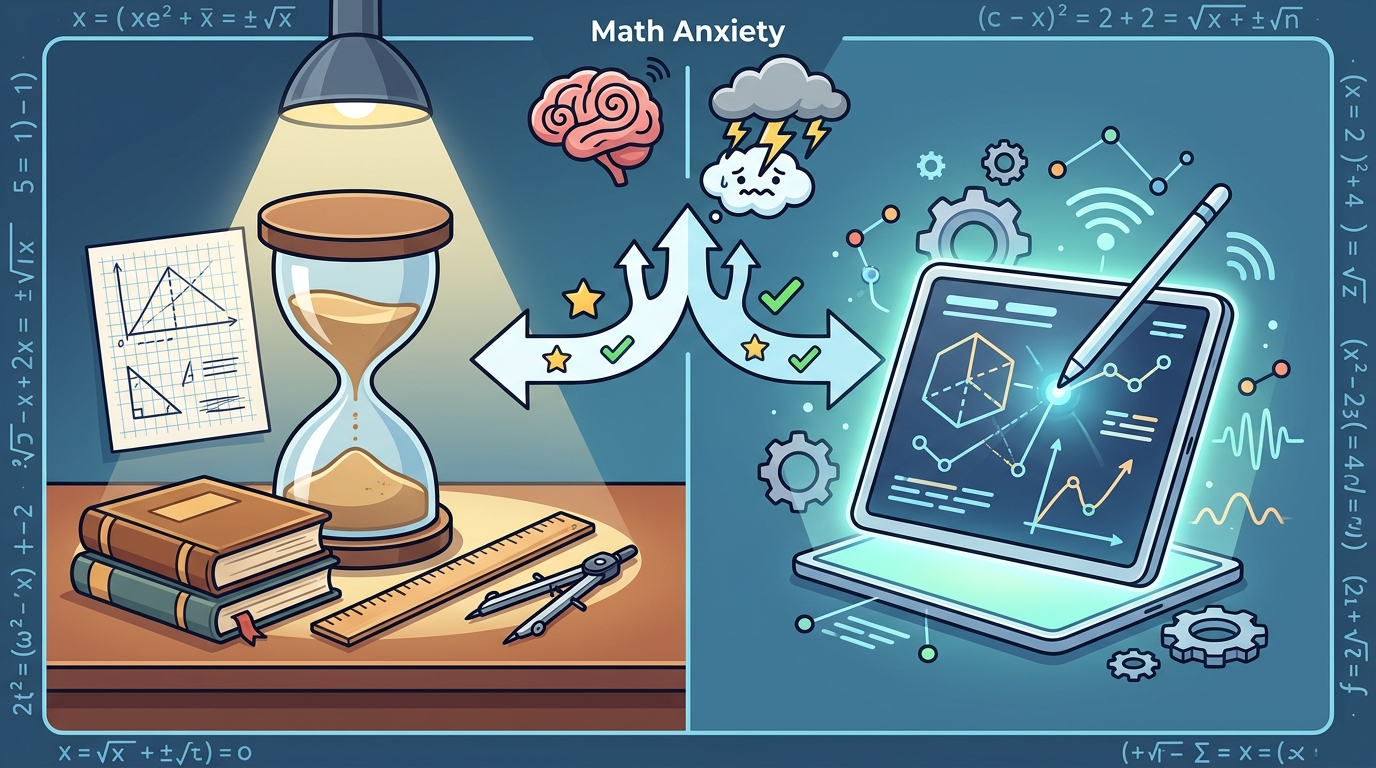
Math anxiety affects a significant portion of students, often stemming from a lack of foundational confidence rather than a lack of ability. Research indicates that approximately 60 percent of students experience some form of math anxiety, which can severely impede their academic progress. The method of instruction plays a critical role in overcoming this barrier. Whether you choose a virtual math tutor or an in-person specialist, the goal remains the same: transforming frustration into mastery. This guide compares these two primary delivery models to help you make an informed decision for your student. (MATHEMATICS CONFIDENCE AND) (Home)
Core Differences in Delivery
The fundamental distinction between virtual and in-person tutoring lies in the medium of interaction. Virtual tutoring relies on digital platforms to facilitate real-time instruction, while in-person tutoring requires physical presence in a shared space. Both models can be highly effective, but they serve different logistical and pedagogical needs.
Understanding these differences is essential for parents and students navigating the educational landscape. The choice often depends on the student's learning style, the specific math subject being addressed, and family scheduling constraints. A virtual math tutor offers flexibility that traditional models cannot match, whereas in-person sessions provide a structured environment that minimizes digital distractions.
The Virtual Math Tutor Advantage
Virtual tutoring has surged in popularity due to its accessibility and technological integration. One of the primary benefits is the ability to connect with specialized instructors regardless of geographic location. This is particularly valuable for advanced mathematics topics where local expertise might be limited.
Flexibility and Convenience
Virtual sessions eliminate commute times, allowing for more efficient use of study hours. Students can attend lessons from the comfort of their homes, which often reduces the stress associated with traveling to a tutoring center. This convenience is a major factor for families with busy schedules or those living in rural areas.
Interactive Digital Tools
Online platforms often feature built-in digital whiteboards, screen sharing, and recording capabilities. These tools allow tutors to demonstrate complex problems step-by-step while students follow along in real time. The ability to record sessions also enables students to review difficult concepts later, reinforcing learning through repetition.
Cost-Effectiveness
Virtual tutoring can sometimes be more affordable than in-person services due to lower overhead costs for the instructor. Additionally, the elimination of travel expenses for both parties contributes to overall cost savings. Many virtual tutors offer sliding scale rates based on need and commitment, making high-quality education more accessible.
The In-Person Tutoring Benefit
In-person tutoring remains a powerful tool for students who thrive in structured, face-to-face environments. The physical presence of a tutor allows for immediate non-verbal feedback and a deeper personal connection.
Minimized Distractions
For students who struggle with focus, a dedicated physical space free from digital interruptions can be crucial. In-person tutoring ensures that the student's attention remains on the material at hand, rather than on notifications or other screen-based distractions.
Hands-On Learning
Certain mathematical concepts, particularly in geometry or algebra, benefit from the tactile experience of writing on paper and using physical manipulatives. In-person tutors can easily adapt their materials to suit the student's immediate needs, providing a more personalized tactile learning experience.
Building Confidence Through Presence
The emotional support provided by a tutor's physical presence can be invaluable for students with severe math anxiety. Seeing a tutor's encouraging expressions and body language can help build trust and confidence more rapidly than digital communication alone.
Service Comparison Matrix
The following table summarizes the key differences between virtual and in-person math tutoring to assist in your decision-making process.
| Feature | Virtual Tutoring | In-Person Tutoring |
|---|---|---|
| Location | Any location with internet access | Specific physical address |
| Flexibility | High scheduling flexibility | Fixed location requirements |
| Technology | Digital whiteboards and recordings | Physical manipulatives and paper |
| Distractions | Potential digital distractions | Controlled environment |
| Cost | Often more affordable | May include travel premiums |
| Personal Connection | Video-based interaction | Face-to-face engagement |
Key Takeaways
- Expertise Matters: A virtual math tutor with 35+ years of classroom experience can provide the same high-quality instruction as an in-person specialist, often with greater flexibility. (MATHEMATICS CONFIDENCE AND)
- Growth Mindset: Both models emphasize that ability and intelligence can develop with effort and practice, helping students move from a fixed to a growth mindset.
- Customized Approach: Effective tutoring meets students where they are, addressing specific needs such as organization, study habits, or confidence building.
- First Consultation: A free initial consultation is essential to determine if the tutor's style and the chosen delivery method are a good fit for the student.
- Sliding Scale Options: Many reputable tutors offer sliding scale rates based on need and commitment, ensuring accessibility for serious students.
- Math Anxiety: Addressing math anxiety requires a compassionate approach that focuses on understanding concepts rather than just completing procedures.
- Long-Term Success: Former students of dedicated tutors often go on to become engineers, teachers, and Ivy League graduates, highlighting the long-term impact of quality instruction.
Frequently Asked Questions
How do I choose between virtual and in-person tutoring?
Consider your student's learning style and focus levels. If they are easily distracted by digital devices, in-person tutoring may be better. If flexibility and access to specialized experts are priorities, virtual tutoring is ideal.
Is virtual math tutoring as effective as in-person?
Yes, virtual tutoring can be equally effective, especially when using interactive digital tools. The key is having an experienced tutor who can engage the student remotely.
What subjects do virtual math tutors cover?
Virtual tutors typically cover a wide range of subjects, from basic arithmetic to advanced calculus. The digital format allows for easy sharing of complex problems and solutions.
Do you offer sliding scale rates?
Yes, sliding scale rates are available based on need and commitment. This ensures that serious students can access high-quality instruction regardless of financial constraints.
How do I schedule a free consultation?
You can schedule a free consultation by contacting the tutor directly through the contact page. This initial meeting helps determine if the tutoring style is a good fit.
What is the hourly rate for private tutoring?
The standard rate is $100 per hour, but sliding scale options are available. This pricing reflects the high level of expertise and personalized attention provided.
Can virtual tutoring help with math anxiety?
Absolutely. Virtual tutors often use a compassionate approach that focuses on building confidence and understanding, which is crucial for overcoming math anxiety.
Schedule Your Free Consultation
Ready to transform your student's relationship with mathematics? Whether you prefer the flexibility of a virtual math tutor or the structure of in-person sessions, expert guidance is available. Michael J. Murphy, M.A., offers private math tutoring with a proven track record of success. Contact us today to schedule your free first consultation and discover how we can help your student succeed.