

Virtual Private Math Tutoring for Middle & High School Students
Math anxiety affects a significant portion of students, with data showing that approximately 60% of students experience some level of math-related stress. This anxiety often peaks during middle and high school years when concepts become more abstract and cumulative. For families seeking effective intervention, virtual private math tutoring has emerged as a powerful solution. It offers personalized attention that bridges the gap between classroom instruction and individual learning needs. This guide explores how one-on-one online sessions can transform a student's relationship with mathematics. (Home)
Understanding the Need for Private Support
Mathematical learning is both cumulative and cyclical. It builds like a tower while also spiraling back to revisit and deepen earlier ideas. When a student misses a foundational concept in middle school, that gap widens in high school algebra and geometry. Traditional classroom settings, while valuable, often cannot provide the individualized pacing required to close these gaps effectively.
Private tutoring addresses this by meeting students where they are. Some students love math and want to explore it more deeply. Others struggle for a variety of reasons, and some simply dislike math and believe they will never be good at it. For many students, math anxiety is a real obstacle. Others need support with organization, study habits, or confidence. Effective tutoring helps students across all of these situations by providing a safe space to ask questions without judgment.
Research indicates that students who receive consistent academic support show improved self-efficacy and better standardized test scores. The key is finding a tutor who understands not just the math, but the psychology of learning. This is where experienced educators make a profound difference in a student's trajectory.
The Virtual Advantage in Math Education
Virtual tutoring has evolved far beyond simple video calls. Modern online platforms allow for real-time collaboration on digital whiteboards, screen sharing of homework problems, and instant access to digital resources. This mode of instruction offers flexibility that fits busy family schedules while maintaining the rigor of in-person sessions.
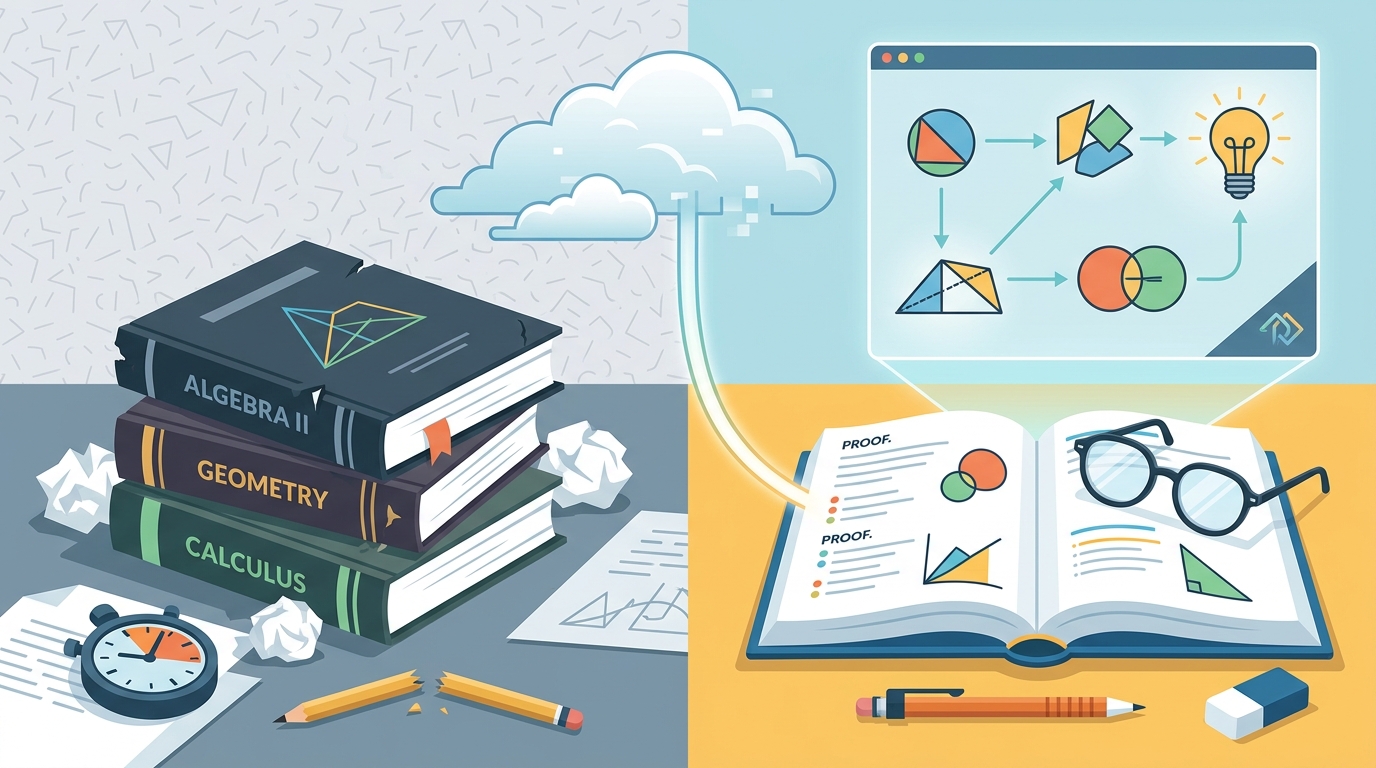
One of the primary benefits of virtual tutoring is the ability to focus on the process rather than just the answer. In a digital environment, tutors can visually break down complex problems step-by-step. This visual scaffolding helps students see the logical flow of mathematical reasoning. It also allows for immediate correction of misconceptions before they become entrenched habits.
Furthermore, virtual sessions can be recorded (with permission) for review. This gives students the opportunity to revisit explanations at their own pace. It reinforces the idea that learning is a process of iteration and refinement. The convenience of online access also reduces the stress associated with travel, allowing students to start sessions feeling calm and ready to learn.
A Proven Pedagogical Approach
Effective math tutoring is not about memorizing formulas. It is about developing mathematical thinking. True understanding comes from mathematical thinking, not just completing procedures. A master teacher focuses on helping students grasp underlying concepts and connect new ideas to what they already know.
A key part of learning mathematics is learning how to ask good questions. Tutors explicitly teach mathematical "habits of mind" so students develop a toolbox of thinking skills and problem-solving strategies they can apply in new contexts. This includes learning to "pay attention to your attention" (self-monitoring) and to "think about your thinking" (metacognition). These are powerful skills that benefit students far beyond math.
For students who believe they "will never get math," the goal is to move gradually from a fixed mindset toward a growth mindset. Making mistakes is not only acceptable, it is essential. Mistakes help the brain grow. We now know that the brain is plastic, not static, and that ability and intelligence can develop with effort and practice. The idea that "neurons that fire together wire together" explains how new neural pathways are formed when students struggle productively and learn from errors. Real learning occurs at the point of challenge.
In fact, many math "mistakes" are really mistakes of attention. Tutors teach students how to track their errors and look for patterns, helping them understand why mistakes occur. This analytical approach turns frustration into curiosity and builds resilience.
Subject Expertise and Curriculum
Not all tutors are created equal. Experience matters. A tutor with over 35 years of classroom experience brings a depth of knowledge that goes beyond textbook answers. They have seen every type of student struggle and have developed specific strategies to overcome them. Former students of such educators often go on to become engineers, teachers, and Ivy League grads, a testament to the lasting impact of quality instruction.
The subject areas covered in private tutoring typically include:
- Middle School Math: Pre-algebra, algebra I, geometry foundations, and standardized test prep.
- High School Math: Algebra II, geometry, trigonometry, pre-calculus, and calculus.
- Test Preparation: Strategies for SAT, ACT, and state-specific proficiency exams.
The goal is to provide precise language that deepens mathematical understanding. By focusing on the "why" behind the "how," tutors help students build a robust mental framework. This framework allows them to tackle unfamiliar problems with confidence rather than relying on rote memorization.
Pricing and Accessibility
Access to quality tutoring should be balanced with affordability. Many families worry about the cost of private instruction. However, sliding scale options are often available based on need and commitment. This ensures that serious students who are applying themselves can receive the support they need regardless of financial constraints.
For those considering this path, the first consultation is typically free. This allows families to find out if they are a good fit. It is an opportunity to discuss specific challenges, learning styles, and goals. It also gives the student a chance to interact with the tutor and assess their comfort level.
Whether in-person or online, the focus remains on the student's success. The tutor works with any student who is serious about applying themselves. This commitment to accessibility and individualized care defines the service model. It is not just about improving grades, but about changing mindsets and building lifelong skills.
Key Takeaways
- Expertise: The tutor has over 35 years of classroom experience and a proven track record of student success.
- Approach: Emphasis is placed on mathematical thinking and problem-solving, not just procedural memorization.
- Mindset: The service actively works to convert math anxiety into a growth mindset through error analysis.
- Flexibility: Both in-person and online tutoring options are available to suit different family needs.
- Accessibility: A sliding scale rate is available based on financial need and commitment level.
- Cost: The standard rate is $100 per hour, with the first consultation provided free of charge.
- Results: Former students have gone on to attend Ivy League universities and pursue careers in engineering.
Frequently Asked Questions
What subjects do you tutor?
I provide private math tutoring for middle school and high school students. This includes pre-algebra, algebra, geometry, trigonometry, pre-calculus, and calculus. I also assist with standardized test preparation.
Do you offer online tutoring?
Yes, I offer both in-person and online tutoring services. Online sessions are conducted via secure video conferencing platforms with interactive digital whiteboards to ensure a seamless learning experience.
How much does tutoring cost?
The standard rate is $100 per hour. However, I offer a sliding scale based on need and commitment to ensure that serious students can access the support they need.
Is there a free consultation?
Yes, the first consultation is free. This allows us to discuss your specific needs, determine if we are a good fit, and outline a plan for success.
What is your teaching philosophy?
I believe that every student is capable of learning mathematics. My approach emphasizes understanding over procedures, focusing on mathematical thinking, meaningful problem solving, and developing critical thinking skills.
How do you help with math anxiety?
I help students move from a fixed mindset to a growth mindset. By teaching them to track errors and understand that mistakes are essential for brain growth, I help reduce anxiety and build confidence.
What areas do you serve?
I offer tutoring services in the Akron, Ohio area for in-person sessions. Online tutoring is available to students regardless of their geographic location.
Get Started Today
Don't let math anxiety hold your student back. Take the first step toward confidence and mastery. Contact me to schedule your free consultation and find out if we are a good fit. Visit the Contact Page to send a message or learn more about my background and qualifications. Let's work together to turn "I hate math" into "I can do this!"