
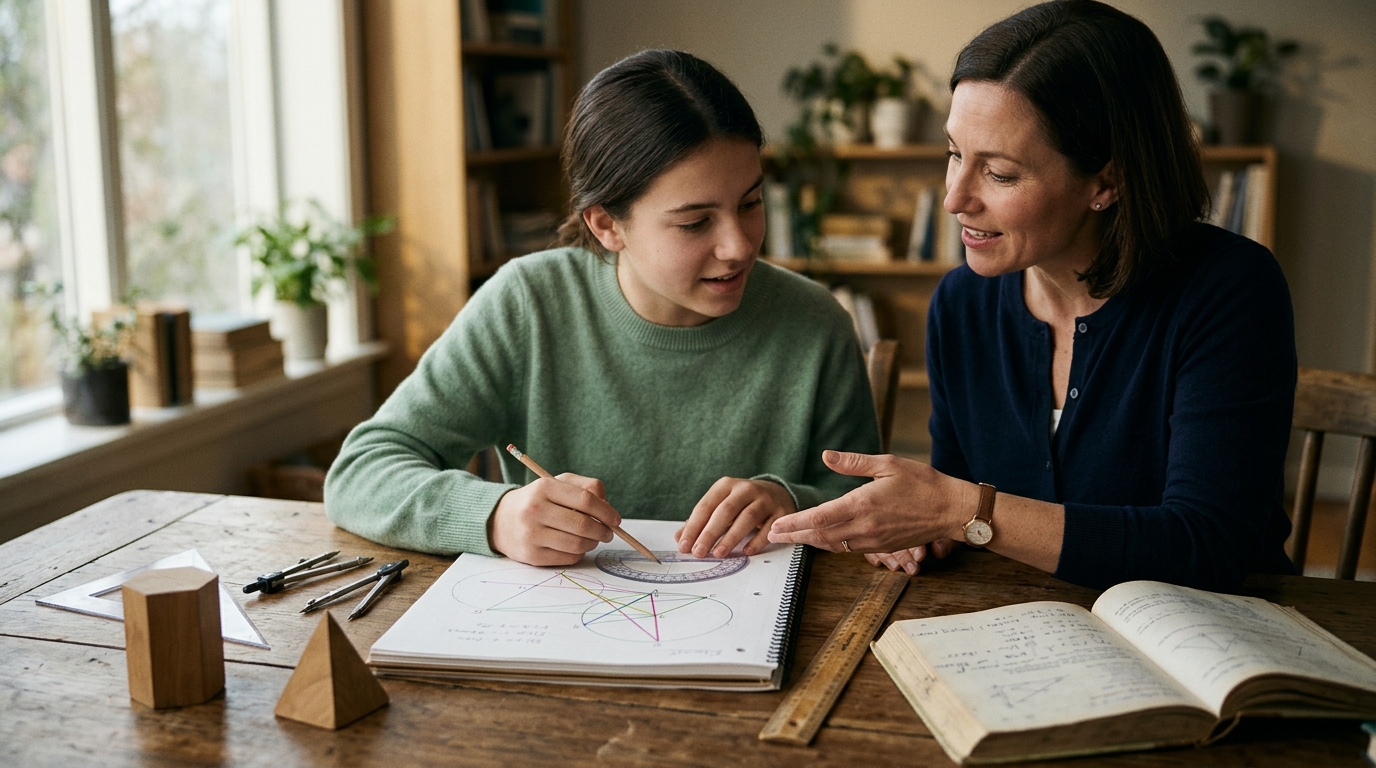
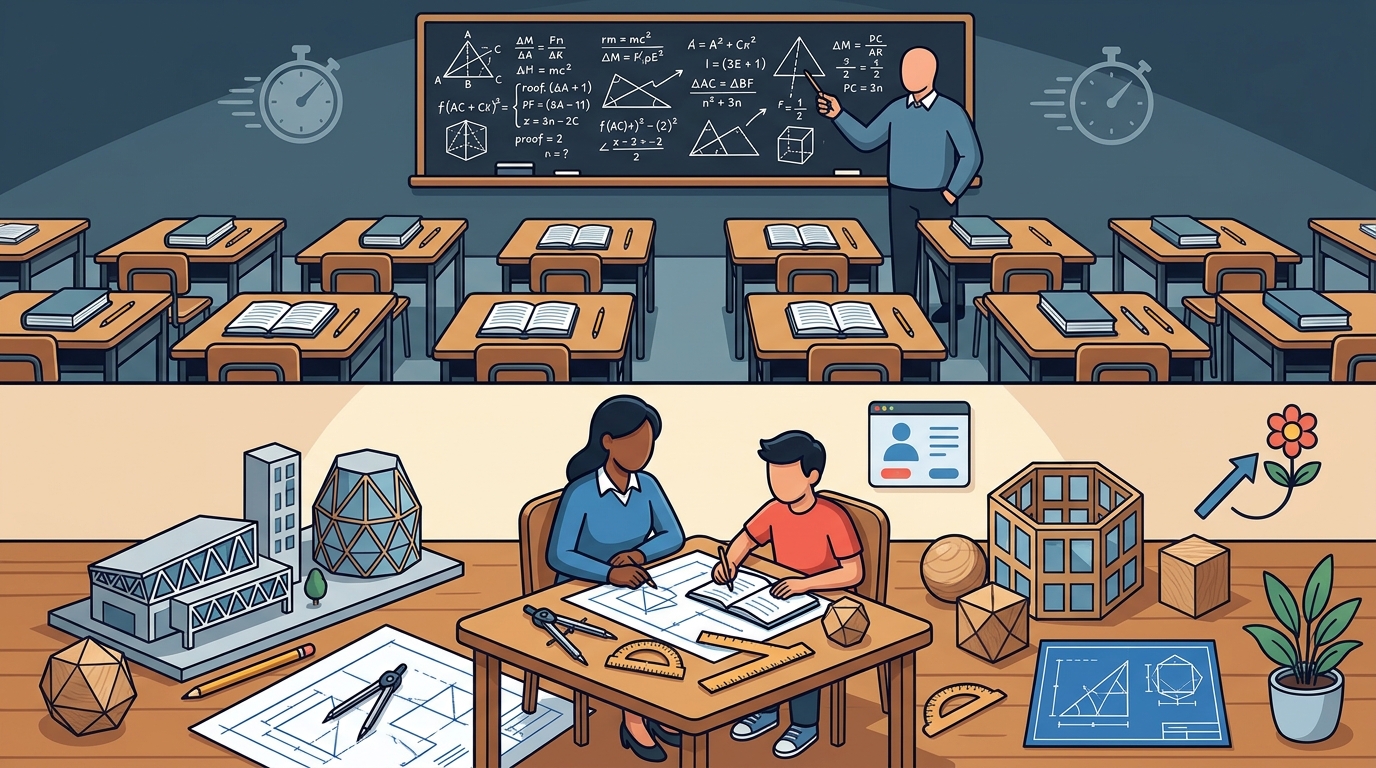
Traditional classroom instruction often prioritizes speed and coverage, leading to rote memorization of formulas. One-on-one geometry tutoring focuses on deep conceptual understanding and individualized pacing. This difference is critical for students who struggle with abstract spatial reasoning and logical proof structures. For additional details, review the .
The Pacing and Attention Gap
Classroom instruction moves at the speed of the average student. This creates a significant pacing gap for those who need more time to process complex geometric proofs. In a traditional setting, a teacher must manage thirty or more students simultaneously. This limits the amount of individual attention any single student can receive during a lesson. For additional details, review the Frequently Asked Questions.
One-on-one tutoring eliminates this bottleneck. The instructor can pause, rewind, and re-explain concepts until the student grasps the underlying logic. This personalized pacing allows for a deeper dive into why a theorem works, not just how to apply it. For example, a student might struggle with the concept of congruent triangles. A tutor can spend an entire session exploring the visual and logical connections between SSS, SAS, and ASA postulates.
Conceptual Depth vs. Procedural Fluency
Traditional geometry classes often emphasize procedural fluency. Students learn to plug numbers into formulas to get an answer. While this builds speed, it rarely builds true understanding. When a problem is slightly modified, students often fail because they do not understand the geometric principles behind the procedure.
Tutoring prioritizes conceptual depth. The instructor guides the student to derive formulas rather than memorize them. This approach builds a robust mental framework. For instance, instead of memorizing the area of a trapezoid, a tutor helps the student decompose the shape into a rectangle and two triangles. This decomposition skill transfers to other complex shapes and real-world applications.
Addressing Individual Learning Styles
Every student processes information differently. Some are visual learners who need diagrams. Others are kinesthetic learners who benefit from physical models. Traditional classrooms rarely accommodate these diverse learning styles effectively. A single lecture format cannot serve all students simultaneously.
Personalized tutoring adapts to the individual. A tutor can use dynamic geometry software, physical manipulatives, or verbal reasoning based on the student's preference. This flexibility is crucial for students who have struggled with math in the past. It helps them find a method that clicks. For example, a student who struggles with 3D geometry might benefit from building physical models of prisms and pyramids.
Building Confidence and Growth Mindset
Math anxiety is a significant barrier to learning geometry. In a large classroom, students may fear making mistakes in front of peers. This fear can lead to avoidance and disengagement. A supportive tutoring environment reduces this pressure. The student feels safe to ask questions and make errors.
This safety fosters a growth mindset. Students begin to view mistakes as learning opportunities rather than failures. This shift in attitude is often the most significant outcome of tutoring. It transforms the student's relationship with mathematics. For example, a student who previously avoided geometry homework may start seeking out challenging problems to test their new understanding.
The Role of Feedback and Correction
Timely and specific feedback is essential for mastery. In a traditional classroom, homework is often graded with a simple score. This provides little information about where the student went wrong. A tutor provides detailed, immediate feedback. They can identify the specific step where a logical error occurred.
This precision helps students correct their thinking in real-time. It prevents the reinforcement of incorrect patterns. For example, if a student incorrectly applies the Pythagorean theorem to a non-right triangle, the tutor can immediately point out the error and guide the student to the correct approach. This immediate correction is far more effective than waiting for a graded paper to be returned days later.
Key Takeaways
- Traditional instruction prioritizes coverage and speed, often at the expense of individual understanding.
- One-on-one tutoring allows for personalized pacing and deep conceptual exploration.
- Conceptual depth is built by deriving formulas and understanding geometric principles.
- Tutoring adapts to individual learning styles, using visual, kinesthetic, or verbal methods.
- A supportive tutoring environment reduces math anxiety and fosters a growth mindset.
- Immediate, specific feedback from a tutor helps correct errors in real-time.
Frequently Asked Questions
Is one-on-one tutoring better than small group tutoring?
How long does it take to see improvement in geometry?
Improvement varies by student. Many students see significant gains in confidence and understanding within a few sessions. Consistent practice and engagement are key to long-term success.
Can tutoring help with test anxiety?
Yes. A supportive tutoring environment helps students build confidence. This confidence often translates to better performance under test conditions. Tutors can also provide strategies for managing time and stress during exams.
What if I am behind in my geometry class?
Tutoring can help catch up on missed concepts. The instructor can identify gaps in foundational knowledge and build a plan to address them. This allows the student to re-engage with the current curriculum.
Do you offer online tutoring?
Yes, online tutoring is available. It provides the same level of personalization and conceptual depth as in-person sessions. Digital tools can enhance the learning experience for geometry.
How do I know if tutoring is right for my student?
Consider the student's learning style and current challenges. If they struggle with understanding concepts or feel anxious about math, tutoring may be a good fit. A free consultation can help determine the best approach.
Next Steps for Your Student
Understanding the difference between classroom instruction and personalized tutoring is the first step. If your student is struggling with geometry, consider the benefits of individualized attention. to schedule a free consultation and discuss how we can help.